Microwave-driven exsolution (ACS nano, 2023)
Discover the innovative approach to creating metallic nanoparticles with our latest study, ” Microwave-Driven Exsolution of Ni Nanoparticles in A-Site Deficient Perovskites,” published in November 2023 in ACS Nano, American Chemical Society.
Exsolution has emerged as a promising method for generating metallic nanoparticles, surpassing traditional deposition methods such as impregnation in terms of robustness and stability.
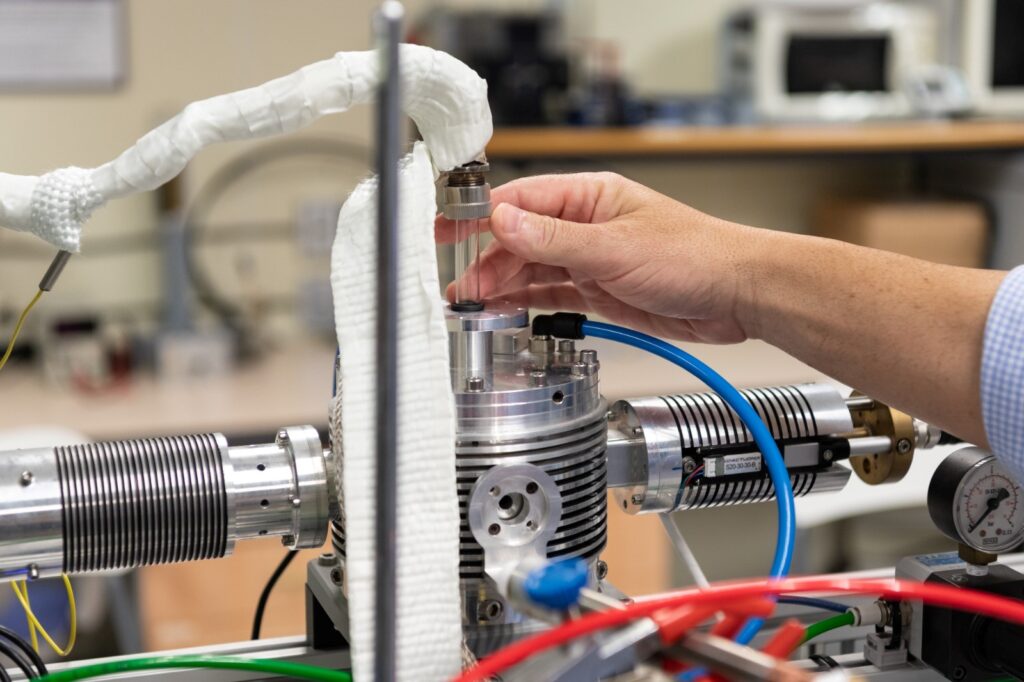
Here, we demonstrate the exsolution of catalytically active Ni nanoparticles driven by microwaves in the absence of hydrogen or low pressures. With the aid of microwaves, we were able to generate these exsolved nanoparticles at milder temperatures and shorter exposure times than conventional thermal exsolution.

ACS Nano 2023
By overcoming the limitations of classic thermal exsolution, this method expands the possibilities for exsolution techniques, particularly in energy applications related to green fuel production. The study underscores the versatility and practicality of MW-driven exsolution for producing high-quality metallic nanoparticles for various industrial applications.
This work is the result of 4 years of collaborative efforts between the Energy Storage and Conversion Group Instituto de Tecnología Química (UPV-CSIC) and the Microwave Division of the Research Institute ITACA from Universitat Politècnica de València (UPV).