Microwave Measurements

ITACA-DIMAS provides specialized services in the precise measurement and characterization of RF and microwave components, circuits, and antennas.

Our dedicated laboratory in Valencia is equipped with state-of-the-art RF and microwave instrumentation, enabling highly accurate assessments of S-parameters up to 50GHz, noise, impedance, spectrum analysis, temperature profiles and microwave heating.

We also welcome fellow researchers and external companies, inviting them to explore our state-of-the-art laboratory facilities and utilize our resources for collaborative experimental activities within the framework of professional agreements.

Microwave Measurements Read More »

HIPPERWAVES

High Performance and Cost-Effective Microwave Processing of Metal Parts with Ultra High Isostatic Pressing

The automotive industry is under increasing pressure from environmental and security regulations, driving a crucial shift from traditional steel to more sustainable and cost-efficient light alloys such as aluminium and magnesium. Despite their advantages, the current manufacturing technologies for these materials still face high production costs.

Die Casting (DC) is a well-established technology for producing aluminium parts, particularly for the transport industry. High Isostatic Pressure (HIP) can be applied to DC-produced parts for densification to enhance the performance and durability of these components.

The HIPPERWAVES project aims for a pioneering technology that combines HIP processes with an advanced microwave reactor (MW-HIP). This innovative system promises an efficient and rapid method for producing metal parts with exceptional properties, leveraging the ultrafast and volumetric nature of microwave heating applied to metal powders.

The microwave technology developed in the HIPPERWAVES project will revolutionize the manufacturing and post-processing of metal components, offering unprecedented superior properties. This advancement will significantly enhance the efficiency of HIP processes, resulting in substantial cost reductions. Integrating this technological leap will dramatically streamline the production process, leading to significant material and energy savings and improved component quality.

Preliminary laboratory trials indicate that the application of microwave energy in the HIP process can reduce processing time dramatically, potentially increasing productivity by an order of magnitude and lowering associated costs by a factor of ten.

The HIPPERWAVES project is supported by a strong partnership between two leading entities. The Microwave Division of the ITACA Insitute of the Universitat Politécnica de València (ITACA-DIMAS UPV) brings unparalleled expertise in microwave technology, while ROVALMA S.A., an R&D-intensive SME, excels in the development of steels and other alloys. This interdisciplinary collaboration integrates extensive experience in materials science, mechanics, and industrial design, ensuring the project’s success through their combined expertise and resources.

HIPPERWAVES Read More »

MICROPET

Innovative Research on Microwave Heating for PET Preforms

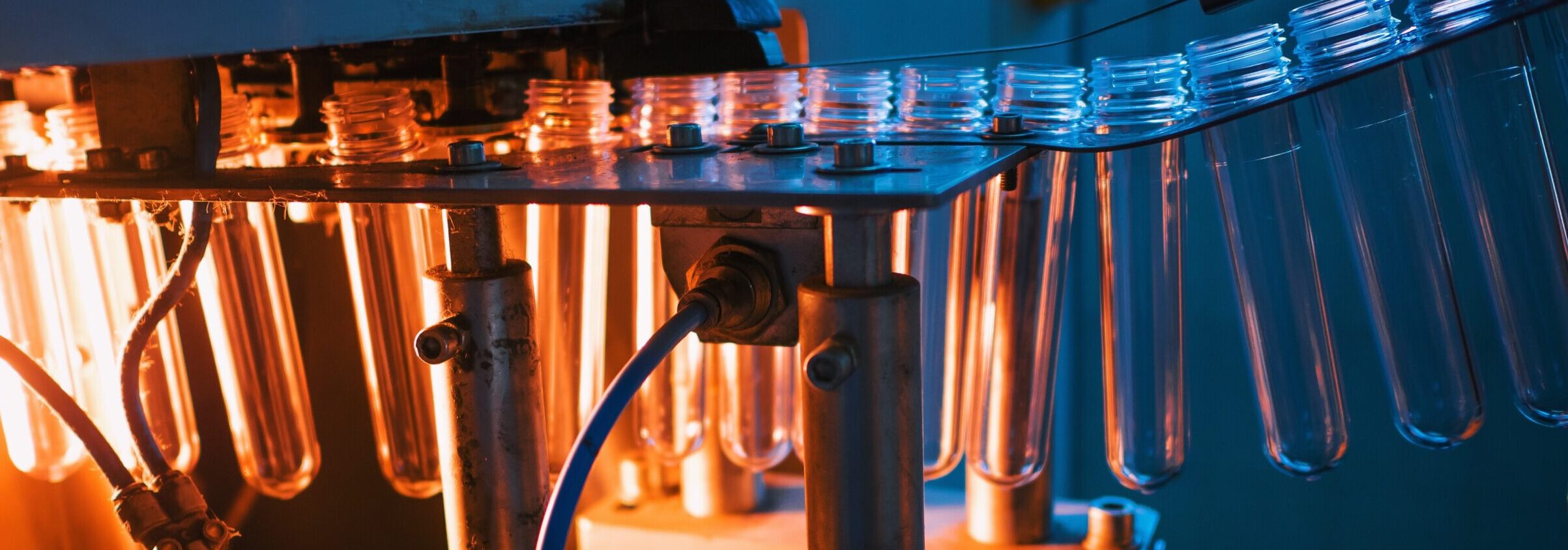
One of the most common methods for manufacturing containers used in packaging, transporting, and storing beverages involves heating PET preforms to a pliable state before the blow molding stage, ensuring that the resulting plastic bottles have the appropriate mechanical properties. Traditional heating technologies, such as infrared heating, often result in significant energy losses, making the process less economical and environmentally friendly.

The MICROPET project will explore microwave technology as an alternative to traditional heating techniques for PET preforms. Unlike conventional methods, microwaves enable direct energy application to the material, enabling rapid heating and significantly reducing both time and energy consumption.

This project is a collaborative effort between ITACA-DIMAS and KRONES AG, a leading company in the packaging and bottling industry. By combining academic expertise with industrial experience, we aim to advance microwave heating technologies for PET preforms.

MICROPET Read More »

DESTINY

Development of an Efficient Microwave System for Material Transformation in energy INtensive processes for an improved Yield

The DESTINY project pursues to realize a functional, green and energy saving, scalable and replicable solution, employing microwave energy for continuous material processing in energy-intensive industries. The target is to develop and demonstrate a new concept of firing for granular feedstock to realize material transformation using full microwave heating as alternative energy source and complement to the existing conventional production.

With 14 partners covering 9 European countries and financed by the EU H2020 research and innovation programme, the DESTINY system is conceived as cellular kilns in a mobile modular plant, with significant advantages in terms of resource and energy efficiency, flexibility, replicability, scalability, and a reduced environmental footprint. Availing of the DESTINY solution’s capability to enhance process stability and efficiency, and given the characteristics of the used raw materials, DESTINY project will investigate intermediate/sub/final products to improve the performance of processes within 3 industrial sectors (Cement, Ceramics and Steel). New heating technologies, monitoring systems and numerical simulation tools will be used to drive the design of large-scale applicators and excel in the outcome.

Experimental results demonstrated that microwave energy leads to an unprecedented 30% increase of the process efficiency, resulting in a remarkable decrease of the CO2 emissions in the considered sectors. The application of this technology can contribute to transform the traditional manufacturing, based on fossil fuels and with a low control of the processing parameters, into a completely new flexible, compact, eco-friendly and smart factory concept.


DESTINY Read More »

ATRIC 4.0

Accelerating the transition towards sustainable, digital and circular Industry 4.0, with new processing technologies, AI and industrial symbiosis to maximise the recovery of combustion waste in the infrastructure sector and reduce CO2 emissions

Waste management is one of the main challenges modern society must face due to its increasing generation and significant environmental, social, and economic impacts. Waste represents a substantial loss of resources, both material and energetic.

The ATRIC 4.0 project, ” Accelerating the transition towards sustainable, digital and circular Industry 4.0, with new processing technologies, AI and industrial symbiosis to maximise the recovery of combustion waste in the infrastructure sector and reduce CO2 emissions,” will provide solutions for the transition of the process industry. This will be achieved through the use of industrial waste and gaseous streams to obtain high-value products in construction and industry. From a circular and digital approach, it will address the dual problem of increased waste production and the depletion of resources available for the development, maintenance, and improvement of infrastructures. It will incentivize value chain stakeholders, enhancing data transparency and fidelity to achieve maximum resource efficiency.

The project will aim to achieve a higher level of circularity (45%) for new high-value secondary raw materials contained in combustion waste and new processes to obtain base cement materials with a lower carbon footprint. They will also seek to reduce CO2 emissions by 20%, capturing and recovering carbon as a renewable energy vector and incorporating the use of renewable energy. This is a step towards a greener, more sustainable future.

The consortium formed for developing the ATRIC 4.0 industrial research project is multidisciplinary, multisectoral, and interregional. It includes companies capable of developing the research lines proposed in this project, thereby increasing the value of current products and services. The consortium comprises eight companies (4 large enterprises, two medium-sized enterprises, and two tech SMEs) and nine top-tier research organizations that will support the companies.

ATRIC 4.0 Read More »

Scroll to Top