A stand-alone instrument for permittivity characterization inside tubes (IEEE TIM, 2019)
We are happy to share our new research describing a novel device for material characterization, “A new stand-alone microwave instrument for measuring the complex permittivity of materials at microwave frequencies,” published in September 2019 in IEEE Transactions on Instrumentation and Measurement.
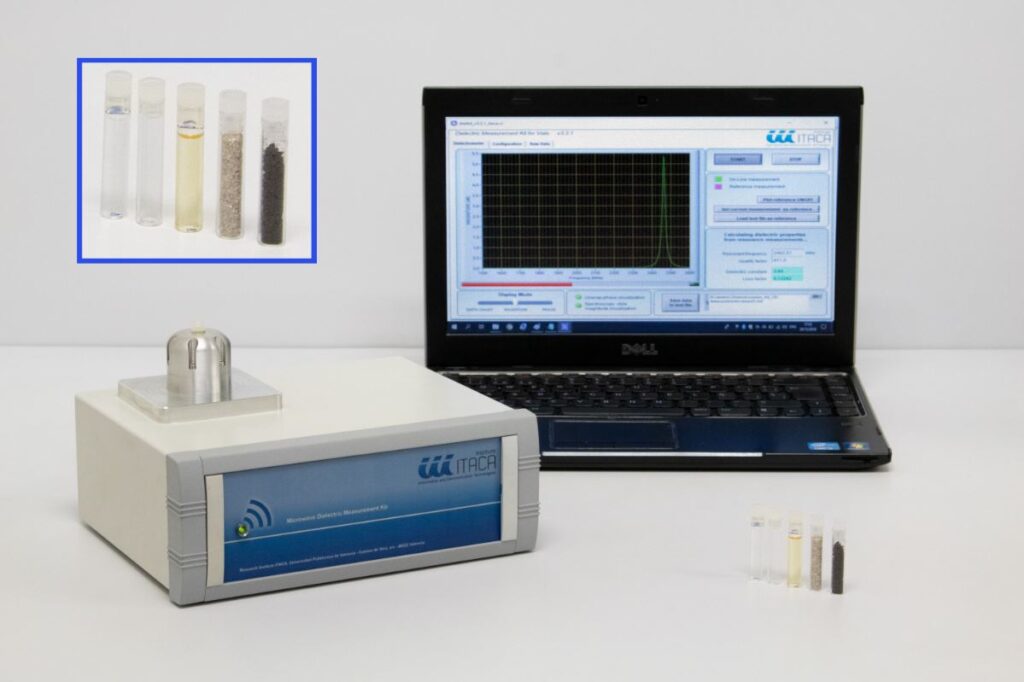
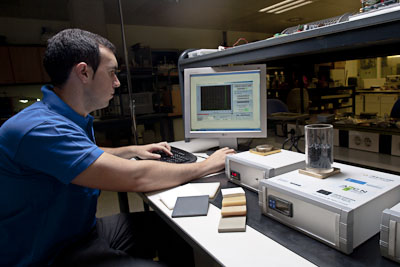
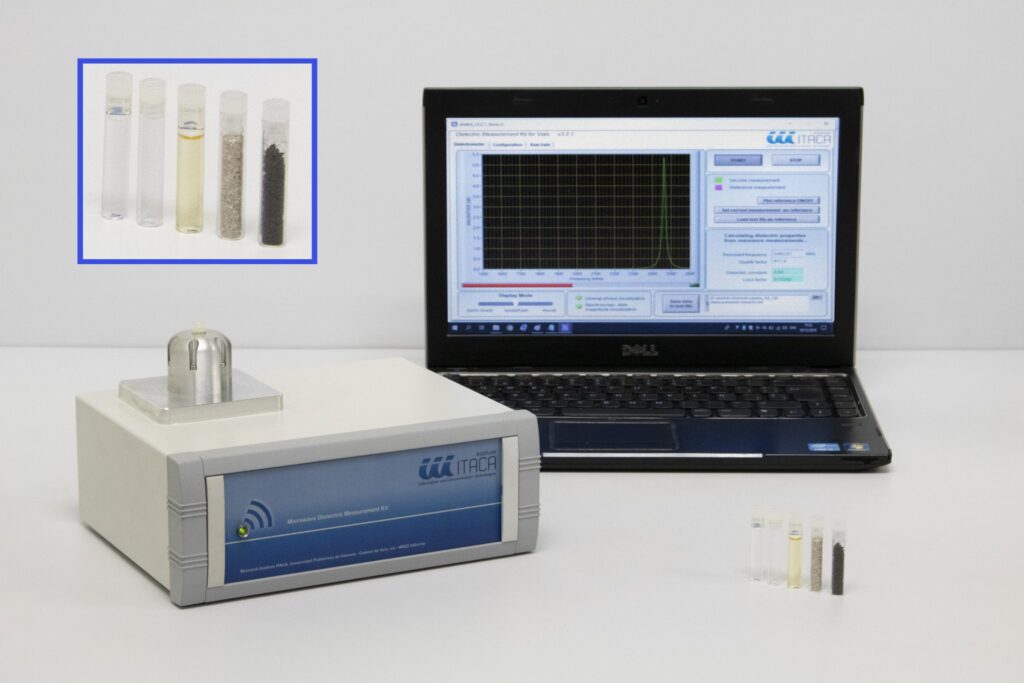
The paper presents a portable, user-friendly, and standalone device for complex permittivity characterization, designed for ease of use by non-specialized personnel and versatility across various scenarios.
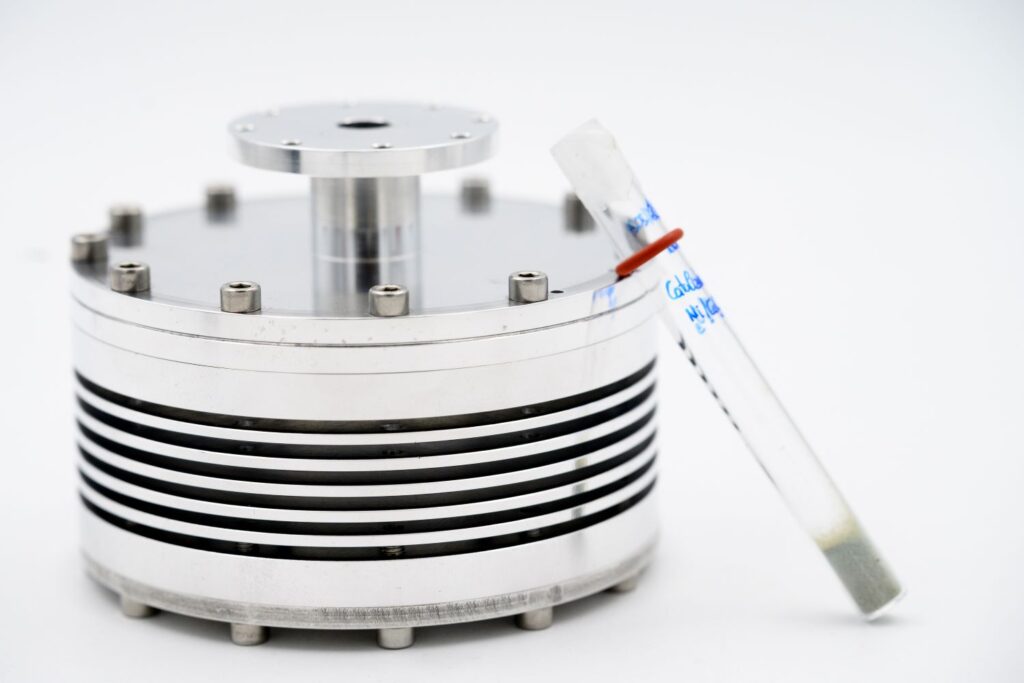
The core component is a microwave cell, a reentrant cavity modified to house pyrex tubes passing through its central axis, enabling measurements of materials at room temperature in different forms, such as liquids, semisolids, powders, granular, and solids. This structure maximizes field intensity in the area where the material is placed, with a frequency shift from 1900 MHz to 2500 MHz for materials with dielectric constants between 1 and 100.
The strong feeding network allows the characterization of low, moderate, and high-loss materials with the same setup. Circuit analysis and mode-matching techniques were used to correlate measurable quantities with permittivity values.
To avoid the need for a full-featured VNA, a portable vector reflectometer operating around the ISM frequency band of 2.45 GHz was developed. The microwave signal generator comprises a PLL frequency synthesizer. The receiver compares the magnitude and phase of forward and reflected signals using two gain and phase receiver units. A microprocessor digitizes the transmitted and reflected signals, communicating with a computer via a serial link.
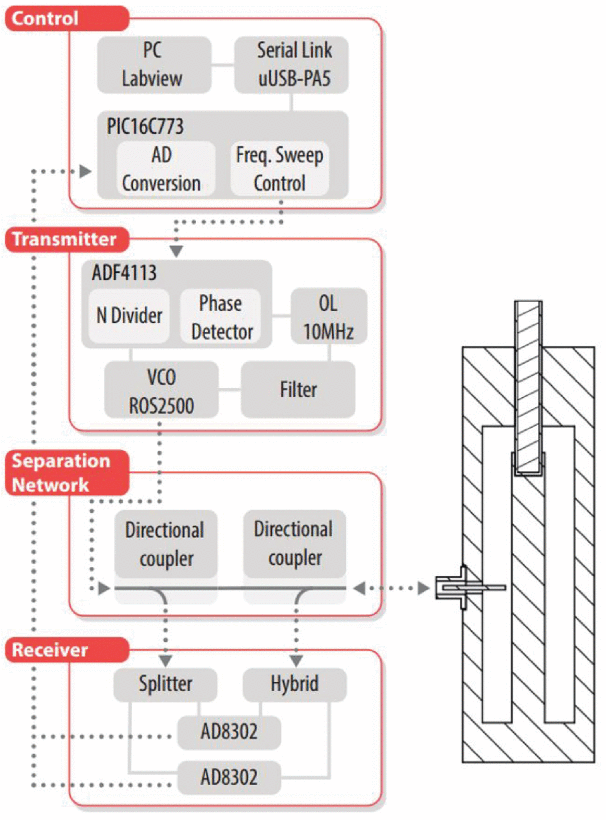
LabVIEW-based software controls the measurement process, determines the resonant frequency and quality factor from reflection measurements, removes coupling network influence, computes permittivity from resonant parameters, and displays the results.
The device demonstrated outstanding accuracy, with dielectric constant measurements within 1.5% and loss factor values within 5% for values ranging from 0.001 to 100.