PRINTWAVE
Innovating 3D Food Printing with Simultaneous Microwave Processing
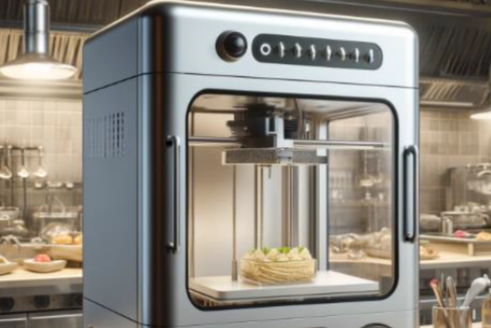
3D printing technology has recently attracted the attention of the food sector by enabling the design of customized foods in terms of dimensional, sensory, and nutritional properties. Three-dimensional food printing (3DFP) is an innovative additive manufacturing (AM) application that uses food 3D printers with edible inks. Unlike conventional 3D printers that use plastics and metals, 3DFPs use food-based inks that can be combined in a variety of ways. Most 3DFPs do not require heat to process food, as they use vegetable pasta, sugar, or chocolate, eliminating the need for pre-consumption heating. However, some food matrices based on vegetables, proteins, or bread doughs require post-printing heat treatment. In this context, a project arises that proposes the integration of a focused microwave (MW) heating mechanism in food 3D printers, allowing more precise spatial control of heat during printing.
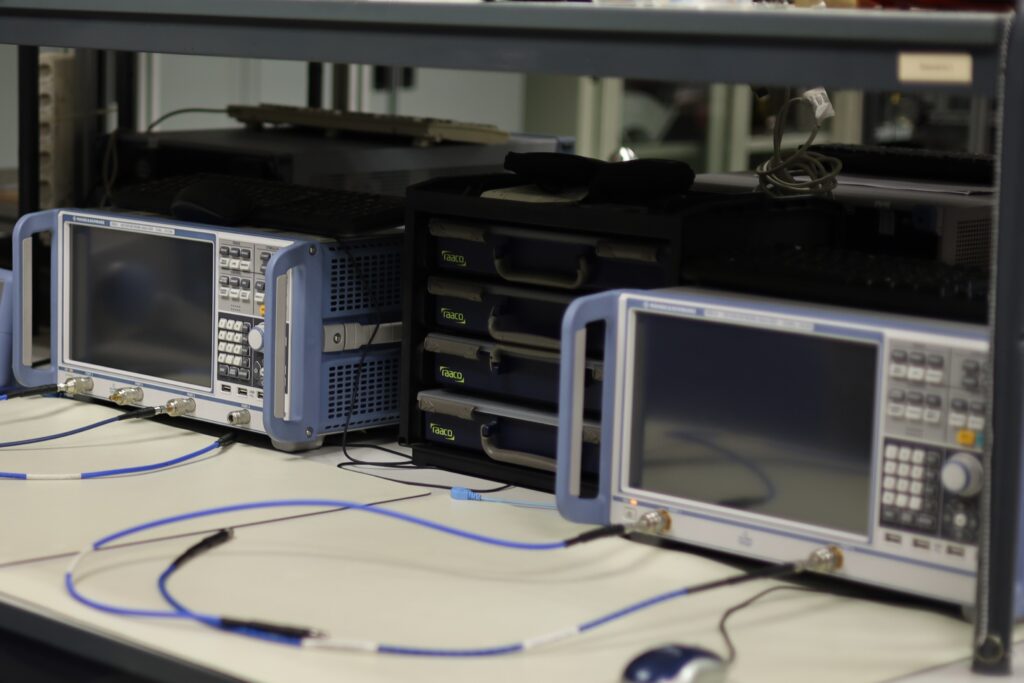
This innovation would make it easier to create complex foods with more ingredients and integrate multiple food elements into a single 3D object. Microwave technology is presented as an efficient and ecological alternative for the rapid and homogeneous heating of food, being known for its positive economic and environmental impact. The project, led by a multidisciplinary team from the Universitat Politècnica de València, the Institute of Food Engineering (FoodUPV), and the ITACA Institute (Institute for the Applications of Advanced Information and Communication Technologies), seeks to develop equipment that allows layer-by-layer cooking of food in a targeted and controlled manner through the combination of 3D printing and microwave technologies.
The collaboration between these groups has already resulted in the filing of a joint patent (P202330889) for this equipment. One of the highlights of the project is its approach to sustainability and circularity in the food industry. The use of a microwave heating mechanism and the development of customized food inks from by-products or surpluses from the food industry represent a significant advance in resource management. Not only does this strategy reduce waste, but it also adds value to materials that would otherwise be discarded, contributing to circularity by closing the life cycle of these components.