José Manuel Catalá

Unlocking microwave heating on the Moon: What do temperature-dependent permittivity measurements reveal about lunar regolith?

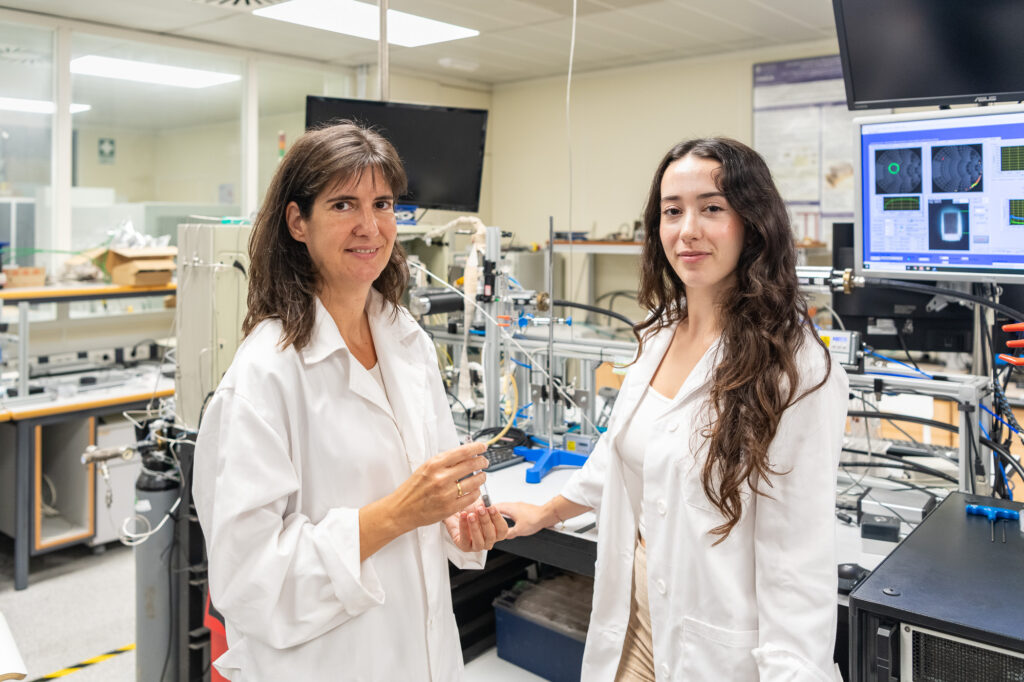
Researchers from DIMAS-ITACA (Universitat Politècnica de València) and the Surrey Space Centre have demonstrated that lunar regolith could be used to build roads, landing pads, and buildings on the Moon’s surface. The researchers have proved that lunar rocks, or regolith, can be heated more efficiently and rapidly using microwaves than with conventional methods such as furnace heating.

Lunar regolith is a dielectric material which can be efficiently heated to melting temperature using microwave energy. Sintered or melted regolith can then be used as feedstock to construct infrastructure on the Moon, including landing pads, roadways and habitats, making this material the focus of numerous studies aimed at enabling in-situ lunar construction.

One of the main challenges is identifying the most efficient, rapid, and sustainable way to process this material. The new research conducted by the DIMAS-ITACA Laboratory and the Surrey Space Centre shows that microwave heating could provide the optimal solution.
The researchers analysed two lunar regolith simulants representing material from the lunar plains and highlands. Their objective was to determine the materials’ dielectric properties. The simulants were heated from room temperature to their melting point under a nitrogen atmosphere. The researchers found that microwave heating enables lunar regolith to absorb energy more efficiently and much faster than conventional heating methods. As a result, microwave-assisted melting not only improves energy efficiency but also significantly accelerates the process, making it possible to produce high-quality construction materials more effectively.

José Manuel Catalá, Director of the DIMAS-ITACA Laboratory and co-author of the study, added: “In addition to optimising energy consumption, microwave heating accelerates the melting and densification of lunar regolith because it heats the material from within.”

The study was funded by the ViceRectorate for Research at the Universitat Politècnica de València (UPV) through a PAID-06-24 First Research Projects Grant.
Unlocking microwave heating on the Moon: What do temperature-dependent permittivity measurements reveal about lunar regolith? Read More »

50 Companies and Universities from all over the world have used the Dielectric Properties Measurement Service at DIMAS-ITACA

PepsiCo, the Spanish Royal Mint (Fábrica Nacional de Moneda y Timbre), and Stanford University are among the more than 50 renowned companies, universities, and tech centers from around the world that have used the dielectric property measurement service provided by DIMAS-ITACA lab at the Universitat Politècnica de València (UPV), a unique facility developed by its team of researchers.

Dielectric properties are fundamental parameters that define how a material interacts with a microwave field, and therefore they are essential parameters for designing wireless devices, sensors and microwave processing systems within several projects related to different industrial sectors or research lines.

DIMAS-ITACA research team knows the growing demand for fast and accurate measurements and the need of measuring over hundreds of samples per year. That’s the reason why the lab offers highly precise and reliable dielectric measurement services by utilizing the most suitable measurement techniques according to the material specifications (material type, size, shape, frequency, temperature, etc.).

ITACA-DIMAS also offers cost-effective stand-alone highly precise dielectric measurement systems for different types of materials.

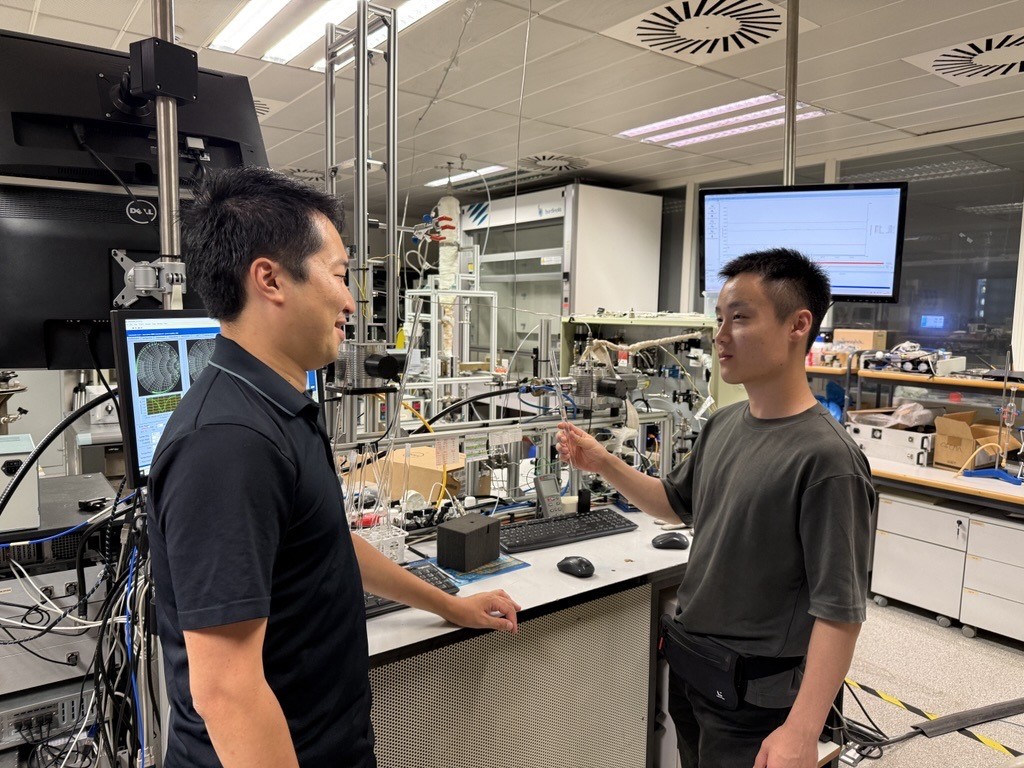
Recently, Fuminao Kisimoto, Assistant Professor in the Department of Chemical System Engineering at the Universidad de Tokio, has concluded a stage at DIMAS-ITACA lab with his team to explore the possibilities of the measurement equipment.

50 Companies and Universities from all over the world have used the Dielectric Properties Measurement Service at DIMAS-ITACA Read More »

PRINTWAVE

Innovating 3D Food Printing with Simultaneous Microwave Processing

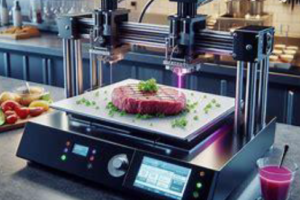
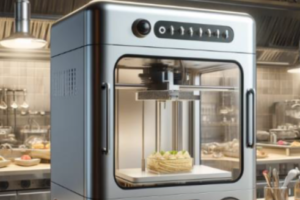
3D printing technology has recently attracted the attention of the food sector by enabling the design of customized foods in terms of dimensional, sensory, and nutritional properties. Three-dimensional food printing (3DFP) is an innovative additive manufacturing (AM) application that uses food 3D printers with edible inks. Unlike conventional 3D printers that use plastics and metals, 3DFPs use food-based inks that can be combined in a variety of ways. Most 3DFPs do not require heat to process food, as they use vegetable pasta, sugar, or chocolate, eliminating the need for pre-consumption heating. However, some food matrices based on vegetables, proteins, or bread doughs require post-printing heat treatment. In this context, a project arises that proposes the integration of a focused microwave (MW) heating mechanism in food 3D printers, allowing more precise spatial control of heat during printing.

This innovation would make it easier to create complex foods with more ingredients and integrate multiple food elements into a single 3D object. Microwave technology is presented as an efficient and ecological alternative for the rapid and homogeneous heating of food, being known for its positive economic and environmental impact. The project, led by a multidisciplinary team from the Universitat Politècnica de València, the Institute of Food Engineering (FoodUPV), and the ITACA Institute (Institute for the Applications of Advanced Information and Communication Technologies), seeks to develop equipment that allows layer-by-layer cooking of food in a targeted and controlled manner through the combination of 3D printing and microwave technologies.

The collaboration between these groups has already resulted in the filing of a joint patent (P202330889) for this equipment. One of the highlights of the project is its approach to sustainability and circularity in the food industry. The use of a microwave heating mechanism and the development of customized food inks from by-products or surpluses from the food industry represent a significant advance in resource management. Not only does this strategy reduce waste, but it also adds value to materials that would otherwise be discarded, contributing to circularity by closing the life cycle of these components.

PRINTWAVE Read More »

i3DAM

Innovation in Personalized and Sustainable Foods: 3D Printer with MW Integration

The I3DAM project aims to develop a 3D food printer with integrated microwave thermal processing for on-site food cooking, layer-by-layer, during printing, in an environment similar to a real-world setting. Technical and commercial feasibility will be demonstrated with a prototype certified for electromagnetic emissions and food safety, capable of printing and cooking foods based on new food inks developed for this application.

The problem of sustainable food supply at a global level is one of the most critical and urgent challenges of the 21st century. The growing global population, projected to reach 9.7 billion by 2050, along with the limitation of natural resources and the effects of climate change, has placed unprecedented pressure on global food systems. Food production and distribution must evolve to become more efficient, equitable, and environmentally friendly.

In this context, 3D food printing arises as a innovative technology with the potential to radically transform the way of producing and consuming food, introducing culinary innovations, improving personalized nutrition and promoting sustainability.

Recently (October 31, 2023), the project leaders, researchers from the ITACA Institute and the Food Engineering Institute (FoodUPV) at UPV, patented (P202330889) an innovative device that combines 3D printing and microwave cooking, capable of thermally process food, layer-by-layer in a targeted and controlled manner, all within the same printing device, addressing some of the most relevant challenges in these techniques.

This patent is the first for this process, during which it is expected that additional patents from the same family will be added as this innovative technology continues being developed.


i3DAM Read More »

FLEXHYON

Flexible hybrid electrical systems for sustainable process intensification on-demand and where required

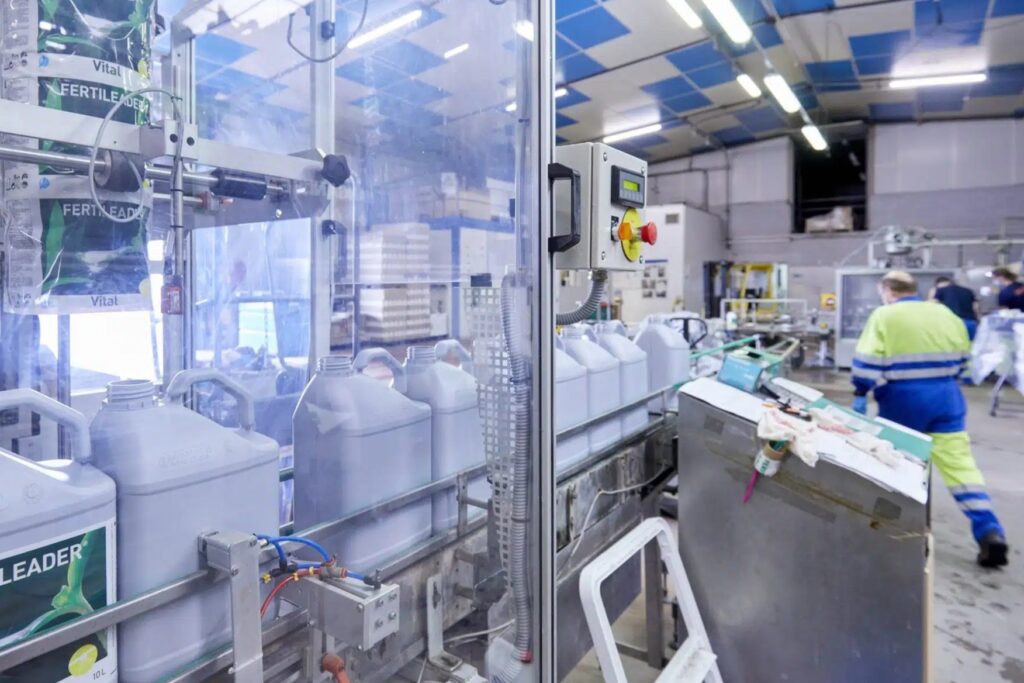
Recognizing the significance of energy efficiency in industry and carbon emissions reduction, FLEXHYON is proposing a clever combination of alternative fully electrified heating systems (microwave, heat pumps, ultrasound) to tackle three specific industrial processes: ultrafast drying of compact material, drying of granular materials and distillation/extraction of ground material to address their urgent need to transition from fossil energy to renewable and low-carbon energy sources.

Three optimized prototypes will be built and demonstrated in 3 industrial environments: ceramics, feed production, biomass. The quality and economic impact of the developments will be evaluated using LCA and LCC; environmental and technical performances, health protection, safety will be demonstrated and validated. Sound market strategies will be developed, giving clear indications on scalability, transferability and replicability across different industrial sectors, commercialization and deployment will be achieved through development and validation of set of business models for the 3 business cases.

The FLEXHYON solutions will exhibit significantly higher energy efficiency in comparison to traditional fossil fuel-based heating technologies, therefore leading to a reduction in GHG emissions, maximizing primary energy savings, and enabling higher production flexibility (e.g. production on-demand, production on-site). Their scalability (upscaling, downscaling) will allow to better follow market demand and enable leaner production paradigms.”


FLEXHYON Read More »

Scroll to Top