Project

ECLIPSE

Research on new recycling technologies and recovery of complex plastic waste

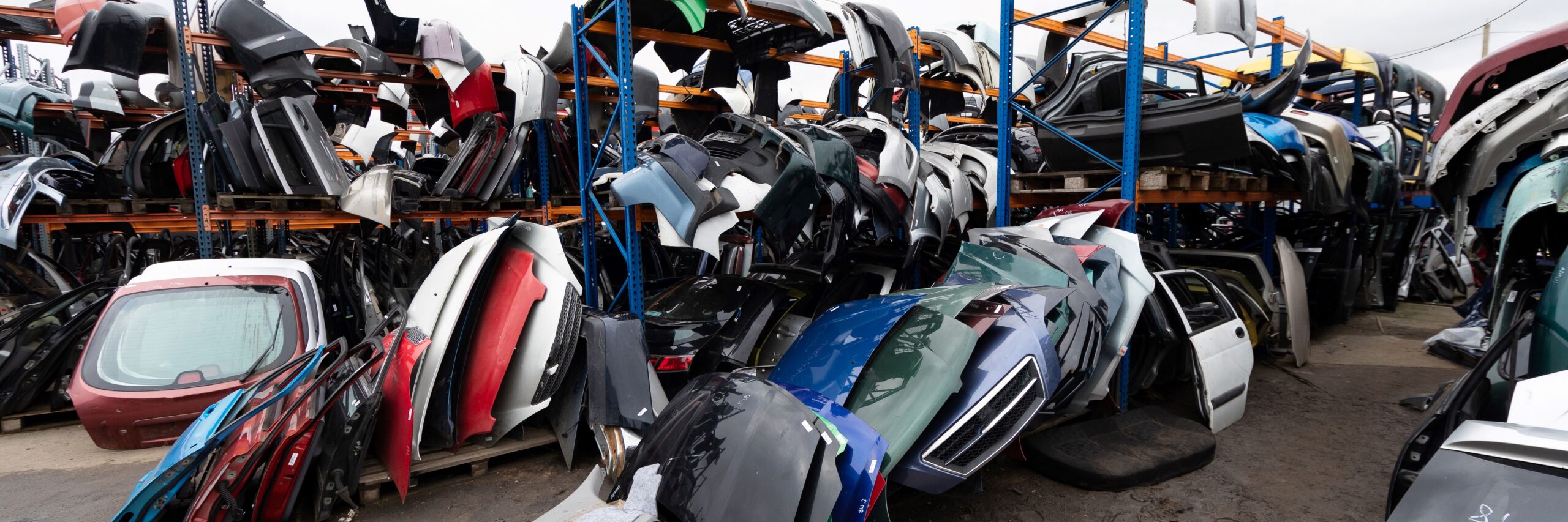
The ECLIPSE project aims to explore innovative technological pathways that enhance the recycling and revalorization of complex polymeric waste. This initiative aims to significantly advance the current separation, recycling, purification, and chemical synthesis methods to produce new polymers fit for reuse.

In addition to researching three recycling technologies—thermal, biological, and chemical—the project will investigate complementary solutions to recycling processes. These solutions are designed to achieve circularity in the overall process, ensuring a significant waste reduction directed to landfills. The focus will be on stages such as identification and separation (achieving high purity in waste streams), purification and isolation of valuable chemical units, synthesis of speciality chemicals, and formulation.

Ultimately, the goal is to establish a sustainable, circular, comprehensive system for recycling and revalorizing complex plastic waste. This system should be versatile, tested in the automotive sector, and applicable to all strategic industrial sectors.

The ECLIPSE project will be carried out over 38 months by a consortium comprising eight companies and seven research entities, including the Polytechnic University of Valencia (UPV). The consortium’s strategy is rooted in a multidisciplinary and multisectoral approach, aiming to implement new circular economy models, promote recycling complex plastic waste, and reduce dependence on petroleum-derived materials.
ECLIPSE Read More »

ECO2CAL

Eco-calcination of carbonates to zero emissions with microwave and hydrogen technology

The ECO2CAL Project aims the transformation of conventional carbonate calcination processes to improve their sustainability, energy efficiency and achieve zero CO2 emissions.

The result of the project will be the development of a microwave thermal decarbonation and chromophore reduction technology and CO2 capture and storage system to be applied to industrial waste and by-products.


The I+D+i project FUSER (INNCAD/2021/42), to be developed in the period 2021-2023, has a global budget of € 330.541,12€ co-financed by the Valencian Agency of Innovation(AVI) under the call Consolidation of the business valor chain in the modality of individual project.


ECO2CAL Read More »

H2MW

Development of a pilot plant for green hydrogen production using microwave technology

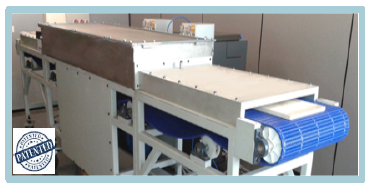
The H2MW Project aims to develop a pilot plant for green hydrogen production using microwave technology. This groundbreaking advancement leverages the reduction of Solid-State Ionic Materials (SSIM) by microwaves at significantly lower temperatures compared to conventional methods.

The project’s objective is to design and construct a technological demonstrator that will serve as a foundation for future industrial-scale devices. This meticulous approach will evaluate and consolidate Key Performance Indicators (KPIs), and develop scalable models, ensuring a robust and successful outcome.

This innovative electrochemical water dissociation process, producing only O₂ as a byproduct, offers a promising pathway for sustainable, carbon-free hydrogen production with low energy costs and high efficiency.

This 2-year project will be a joint effort by the Microwave Division (DIMAS) of the ITACA Institute at UPV, the Energy Conversion and Storage group at the Institute of Chemical Technology (CSIC-ITQ), and the engineering and technology group Sener.

H2MW Read More »

STEP

Stone Technology for Eco-efficient Production

The objective of the STEP project is the implementation of new eco-efficient technologies in the natural stone industry, which are expected to result in significant environmental, financial and sustainability benefits for the construction sector.

The natural stone production process involves drying in natural gas kilns, applying reinforcement resins to seal cracks, and curing the resins in furnaces. The project introduces the use of water-based epoxy resins, formulated for a new thermal curing process to be validated at an industrial scale. This innovation allows the removal of natural gas-fed drying lines, as the new resins are compatible with wet conditions, and enables the adoption of a more efficient thermal curing technology. The combined implementation of these advancements will significantly enhance efficiency, productivity, raw material utilization, and improve health and safety for production line employees in the natural stone sector.

8 European partners participate in this project funded by the EU commission through the CIP-EIP-Eco-Innovation call, with the aim to overcome important limitations associated with the natural stone sector, such as high energy costs, low material efficiency and the emission of toxic volatile organic compounds.


STEP Read More »

NANOFOR

Advanced synthesis of colorless nano-fluorophors

The NANOFOR project aims to obtain colorless nano-fluorophors with high optical response by excitation and up-conversion at pre-designed wavelengths. This objective encompasses recent progress in the fields of nanoscience, materials science, and emerging technological advancements.

Upconverting nanoparticles are usually composed of rare-earth based lanthanide- or actinide-doped transition metals and are of particular interest for their applications in in vivo bio-imaging, bio-sensing, and nanomedicine because of their highly efficient cellular uptake and high optical penetrating power with little background noise in the deep tissue level. They also have potential applications in photovoltaics and security, such as infrared detection of hazardous materials.

This project has been financially supported by the Spanish Ministerio de Economía y Competitividad (MINECO) and by the EU through the European Regional Development Funds (ERDF).

NANOFOR Read More »

Scroll to Top