Project

TRANSZEROWASTE

Upgrading of low-quality iron ores and mill scale with low carbon technologies

The objective of Transzerowaste project is to develop new technologies for upgrading low-quality iron ores and recycling iron-containing residues in the iron and steel production processes, contributing to the EU aim of 100% circular economy and the transition towards green steel production.
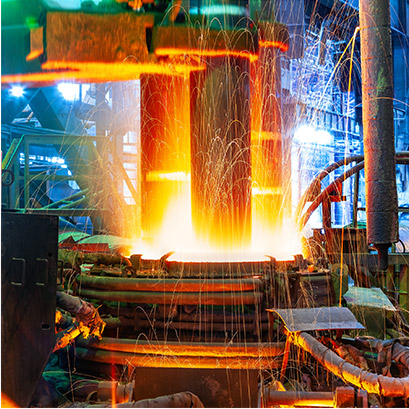
The developed technology will be supported by environmental and economic indicators to identify the most suitable design and ensure sustainability compared to the current technologies. The outcomes of TransZeroWaste could contribute to the upgrade of 27 million t/a materials and to the avoided greenhouse gas emissions of sinter plants, corresponding to 4,3 to 9,9 Mt CO2/a.

This innovative technique to produce high-quality materials for decarbonised steel production, will be accompanied by the development of digital tools supporting the transition towards zero waste in the European steel industry.

This project has been funded by the EU in the HORIZON-CL4-2022-TWIN-TRANSITION-01 program, with 12 partners that will propose new technological approaches towards the abandonment of carbon-intensive sintering.
TRANSZEROWASTE Read More »

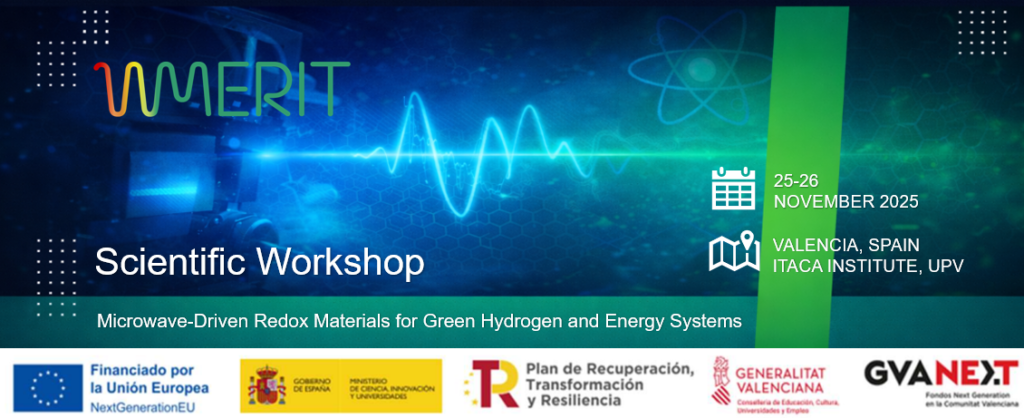
MERIT Scientific Workshop on Microwave-Driven Energy Materials

About the Workshop

The MERIT Scientific Workshop will bring together researchers from the MERIT project and invited research groups to discuss recent advances in microwave-driven redox materials and processes for sustainable energy applications. The event aims to present selected scientific results and experimental progress from the MERIT project, while encouraging scientific exchange with the broader research community.

Participants will gain a deeper understanding of fundamental microwave–matter interactions, advanced material design strategies, and reactor concepts enabling low-temperature hydrogen production, oxygen separation, and related redox technologies.

This two-day event, including a dedicated scientific writing course on the second day, will be of particular interest to researchers, early-career scientists, and members of the scientific community working.


Day 1. 25th-November

  • 10:00 – 10:30 Welcome & Opening Remarks
  • 10:30 – 11:30 Microwave–Matter Interaction: A New Paradigm for Redox Chemistry at Low Temperature.
  • 11:30 – 12:00 Coffee Break
  • 12:00 – 13:00 Understanding Microwave-Induced Reduction: Engineering Solid-State Ionic Materials for Efficient Microwave-Driven Water Splitting.
  • 13:00 – 14:00 Advanced Microwave Reactors for Fundamental Microwave–Matter Interaction Studies
  • 14:00 – 15:00 Lunch Break
  • 15:00 – 16:00 Microwave Reactors for Redox Processes: Design, Diagnostics and Scale-Up.
  • 16:00 – 17:00 Beyond Hydrogen: Future Perspectives and Applications of Microwave-Driven Redox Processes

Day 2. 26th-November

  • 09:30 – 10:00 Introduction to the Course
  • 10:00 – 11:30 Training Course: Scientific Writing and Publishing. Part 1.
  • 11:30 – 12:00 Coffee Break
  • 12:00 – 14:00 Training Course: Scientific Writing and Publishing. Part 2.
  • 14:00 – 15:00 Lunch Break
  • 15:00 – 16:00 Round Table: Challenges and Opportunities for Microwave-Driven Technologies in Energy Systems
  • 16:00 – 17:00 Closing Session

MERIT Scientific Workshop on Microwave-Driven Energy Materials Read More »

Scroll to Top