TRANSZEROWASTE

Welcome to the list of our research group’s projects in the field of microwaves. Our team of researchers is dedicated to advancing knowledge in this area and has undertaken several projects to achieve this goal. We hope that you find our work informative and engaging, and we welcome your feedback and suggestions

TRANSZEROWASTE

Upgrading of low-quality iron ores and mill scale with low carbon technologies

The objective of Transzerowaste project is to develop new technologies for upgrading low-quality iron ores and recycling iron-containing residues in the iron and steel production processes, contributing to the EU aim of 100% circular economy and the transition towards green steel production.
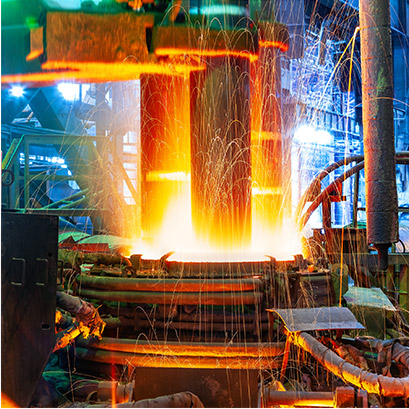
The developed technology will be supported by environmental and economic indicators to identify the most suitable design and ensure sustainability compared to the current technologies. The outcomes of TransZeroWaste could contribute to the upgrade of 27 million t/a materials and to the avoided greenhouse gas emissions of sinter plants, corresponding to 4,3 to 9,9 Mt CO2/a.

This innovative technique to produce high-quality materials for decarbonised steel production, will be accompanied by the development of digital tools supporting the transition towards zero waste in the European steel industry.

This project has been funded by the EU in the HORIZON-CL4-2022-TWIN-TRANSITION-01 program, with 12 partners that will propose new technological approaches towards the abandonment of carbon-intensive sintering.
TRANSZEROWASTE Read More »

eCOCO2

Direct electrocatalytic conversion of CO2 into chemical energy carriers in a co-ionic membrane reactor

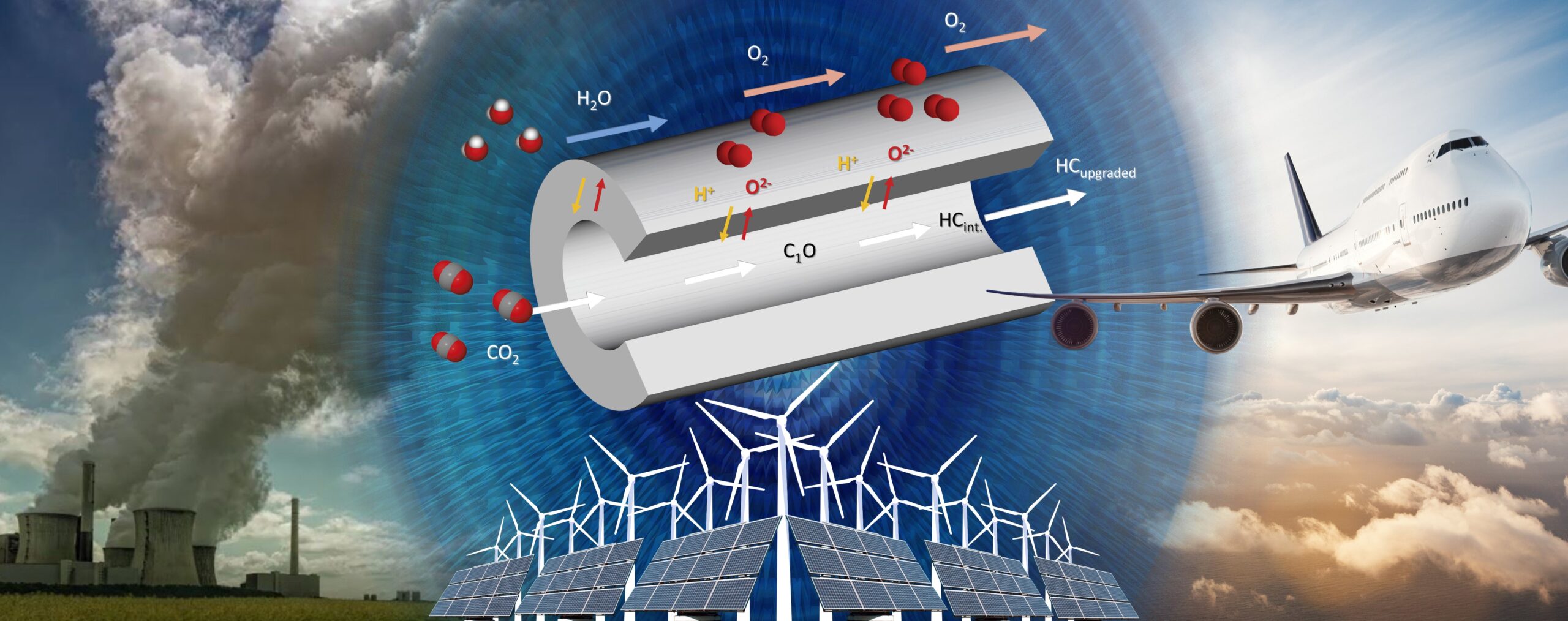
Despite the potential benefits of converting CO2 to fuel, current technologies face significant challenges that hinder their industrial implementation. Typically, these processes require multiple steps and incur in high capital and operational costs. Furthermore, multiple steps and unfavourable thermodynamics make these technologies energy-intensive, with efficiencies of around 60%.

One promising solution to reduce costs and improve energy efficiency is process intensification using membrane reactors, multifunctional units combining a chemical reaction with a membrane-based separation. Another approach successfully applied within process engineering to achieve process intensification is using electrochemical reactors that give the chance to use electric power to supply the energy required by a chemical reaction and to do it with high selectivity. Both concepts can be combined in an electrochemical membrane reactor, with the transport of substances controlled by galvanic operation. Electrochemical reactors use ion-selective membrane electrolytes to separate anodic and cathodic reactions.

EcoCO2 project aims to leverage the advantages of electrochemical processes, membrane reactors, and advanced multi-step catalysis to set up an innovative electrocatalytic co-ionic membrane reactor for the single-step conversion of CO2, using renewable electricity and water steam, to carbon-neutral synthetic liquid fuels for their use as transport fuel, and in particular as jet fuel, at high energy efficiency, very high CO2 conversion rate and moderate-to-low cost.

The EcoCO2 project is a collaborative endeavour, bringing together 12 partners from 8 European countries financed by the EU under the H2020-LC-SC3-2018-NZE-C.

eCOCO2 Read More »

MERIT

Green hydrogen using microwave technology via advanced materials

MERIT project aims to develop fundamental understanding to produce green hydrogen from water by taking advantage of the microwave-driven enhancement of the reduction-oxidation (redox) reactions of solid-state ionic materials (SSIM) at unprecedented mild temperatures (≈ 400 °C). This novel electrochemical water splitting route, delivering just O2 as a by-product, entails a promising opportunity for sustainable, carbon-free H2 production, with projected low energetic costs and high efficiency

The physical principle behind MERIT is based on the induced reduction of selected solid-state materials triggered by microwave irradiation, which promotes the generation of vacancies in the crystal lattice and O2 release.

One of the main singularities of this microwave electromagnetic radiation stems from the unique way it interacts with matter, particularly with SSIM. Microwave energy is directly transferred to the material through the induced excitations on their dipolar and ionic constituents. The exploitation of this property implies the non-contact activation of target molecules in selected SSIMs, being of special interest to those able to generate oxygen vacancies and prompt the H2 generation chain process. Moreover, this type of interaction carries additional inherent advantages. Firstly, eliminating any intermediate step implies simpler equipment than other technologies, namely electrolysers, eliminating the need for cables, electrodes or membranes. Secondly, lacking contact transfer mechanisms avoids inherent potential energy losses, e.g. in conventional thermal heating methods. Indeed, the efficiency of a well-controlled microwave-driven process is only pondered by the SSIM and its ability to absorb the supplied microwave energy, considering that the rest of constituent elements are transparent to this type of radiation.

Experimental setup

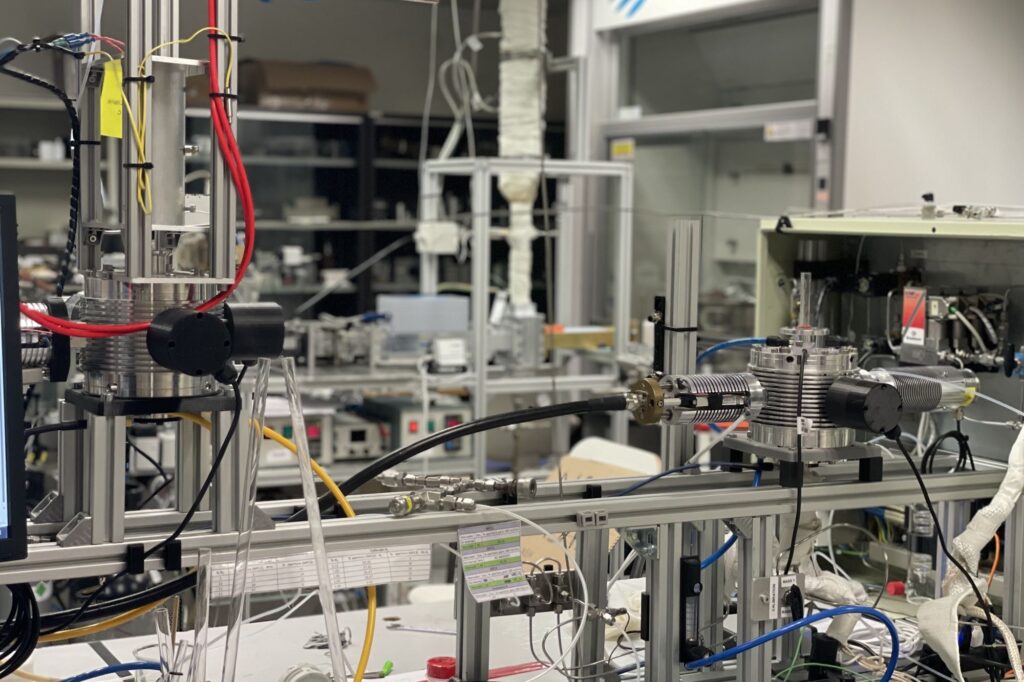
In this three-year project, ITACA-DIMAS team will be supported by relevant research groups to study and optimize the formulation and morphology of SSIM for optimal microwave processing. This collaboration will primarily involve the Energy Conversion and Storage group at the Institute of Chemical Technology (ITQ) and the Nanostructured Films & Particles Research Group (NFP) at the Institute of Nanoscience of Aragon (INA).

MERIT Read More »

Scroll to Top