
Optimizing heating patterns of PET preforms with microwaves (Appl. Therm. Eng, 2022)
Explore our new method for heating PET preforms with microwave energy optimized for the blow moulding process in our latest study, ” Focusing dielectric slabs for the optimization of heating patterns in single mode microwave applicators,” published in November 2021 in Applied Thermal Engineering, Elsevier.
Heating PET preforms is a crucial step in the blow moulding process, which is the predominant technique for producing containers utilized in the packaging, transportation, and storage of beverages. This procedure requires heating a cylindrical PET preform to a flexible state before the blow moulding phase, ensuring that the resulting plastic bottles possess the necessary mechanical properties. In this process, the preform temperature profile is one of the critical parameters for manufacturing a bottle with the desirable mechanical strength.
In this study, a novel approach utilizing adjustable dielectric slabs has been introduced to act as near-field focusing elements inside a single-mode microwave applicator, aiming to modify the temperature profile of PET preforms during microwave heating. …
Optimizing heating patterns of PET preforms with microwaves (Appl. Therm. Eng, 2022)Read More »
Anti-Counterfeiting Marker Detection via Microwave Microscopy (Sensors, 2021)
We are happy to share our new research describing a novel application of microwave technology in the fight against counterfeiting, “Detection of Anti-Counterfeiting Markers through Permittivity Maps Using a Micrometer Scale near Field Scanning Microwave Microscope“, released in August 2021 at Sensors.
The work introduces an innovative approach to detecting anti-counterfeiting markers on banknotes using a specially designed near-field scanning microwave microscope (NSMM). This portable instrument can measure permittivity maps of heterogeneous paper specimens at the micrometre scale, employing the information of a displacement laser and the cavity perturbation technique. …
Anti-Counterfeiting Marker Detection via Microwave Microscopy (Sensors, 2021)Read More »
Hydrogen production via microwave-induced water splitting (Nature Energy, 2020)
Explore a revolutionary method to produce Hydrogen in our paper, “Hydrogen production via microwave-induced water splitting at low temperature,” published in November 2020 in Nature Energy.
Supplying global energy demand with CO2-free technologies is becoming feasible thanks to the rising affordability of renewable resources. Hydrogen is a promising vector in the decarbonization of energy systems, but more efficient and scalable synthesis is required to enable its widespread deployment.
In this research paper we report contactless H2 production via water electrolysis mediated by the microwave-triggered redox activation of solid-state ionic materials at low temperatures (<250 °C). Water was reduced via reaction with non-equilibrium gadolinium-doped CeO2 that was previously in situ electrochemically deoxygenated by the sole application of microwaves. The microwave-driven reduction was identified by an instantaneous electrical conductivity rise and O2 release. This process was cyclable, whereas H2 yield and energy efficiency were material- and power-dependent. …
Hydrogen production via microwave-induced water splitting (Nature Energy, 2020)Read More »
A revolution in energy research, from microwaves to hydrogen
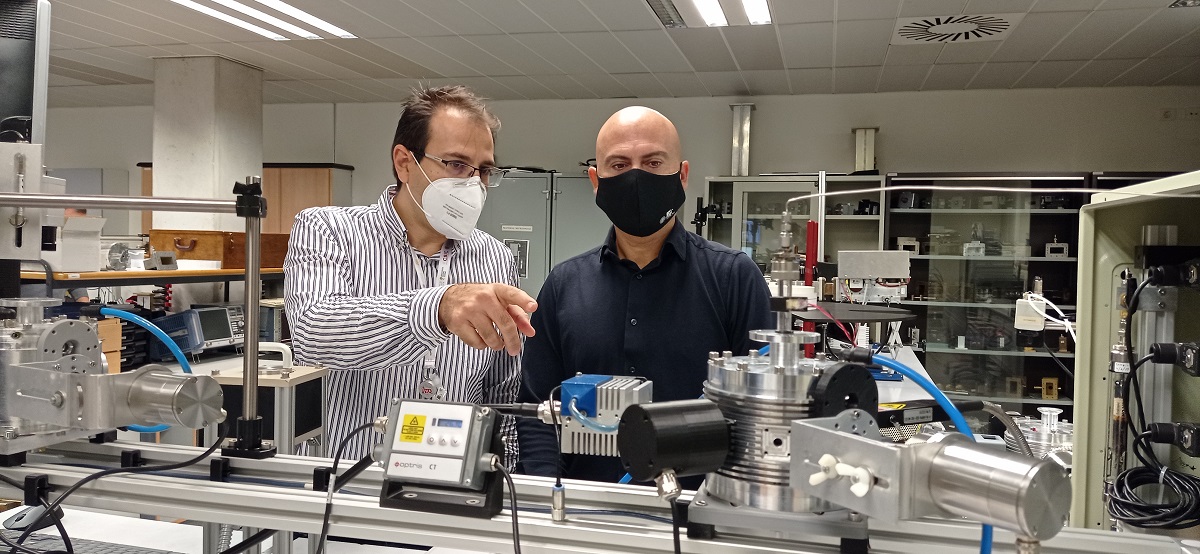
The technology developed by researchers from the ITACA and ITQ institutes makes it possible to transform electric energy into hydrogen or chemical products, solely using microwaves.
A team of researchers from the Polytechnic University of Valencia and the Spanish National Research Council (CSIC) has discovered a new method that makes it possible to transform electricity into hydrogen or chemical products solely using microwaves – without cables and without any type of contact with electrodes.
This represents a revolution in the field of energy research and a key development for the process of industrial decarbonisation, as well as for the future of the automotive sector and the chemical industry, among many others. The study has been published in the latest edition of Nature Energy, where the discovery is explained.
…
A revolution in energy research, from microwaves to hydrogenRead More »
Moisture measurements in granulate materials with DKV
The determination of the moisture content is of economic importance in the manufacturing and processing of materials. This understanding can be essential for evaluating the value of raw materials, implementing control measures, and ensuring final product quality.
Moisture determination has been traditionally measured by analyzing the weight loss of a sample during the drying process, which is very time consuming and labor-intensive method.
Electromagnetic techniques have proven a valuable tool for moisture determination. The principle of microwave moisture content measuring method is based on the fact that permittivity of water is much higher than that of most dry substances. …
Moisture measurements in granulate materials with DKVRead More »
Measurement of Dielectric Properties at temperatures up to 350ºC with DKV
The use of microwaves in fields as communications, radar, medicine, biology, agriculture and industrial processes demands accurate knowledge of the dielectric properties of materials and its variations with respect to many factors.
In particular, monitoring variations of materials dielectric properties with temperature is crucial for many applications, in which it is important to predict the materials performance over the whole working temperature range.
In order to provide a suitable technique, the Dielectric Kit for Vials has been equipped with the necessary components for the dielectric characterization of materials up to 350ºC. …
Measurement of Dielectric Properties at temperatures up to 350ºC with DKVRead More »
A stand-alone instrument for permittivity characterization inside tubes (IEEE TIM, 2019)
We are happy to share our new research describing a novel device for material characterization, “A new stand-alone microwave instrument for measuring the complex permittivity of materials at microwave frequencies,” published in September 2019 in IEEE Transactions on Instrumentation and Measurement.
The paper presents a portable, user-friendly, and standalone device for complex permittivity characterization, designed for ease of use by non-specialized personnel and versatility across various scenarios. …
A stand-alone instrument for permittivity characterization inside tubes (IEEE TIM, 2019)Read More »
Dielectric properties measurements under microwave heating (IEEE MTT, 2015)
Explore the remarkable advancement in permittivity characterization of materials featured in our paper, “Dynamic measurement of dielectric properties of materials at high temperature during microwave heating in a dual mode cylindrical cavity,” published in July 2015 in IEEE Transactions on Microwave Theory and Techniques.
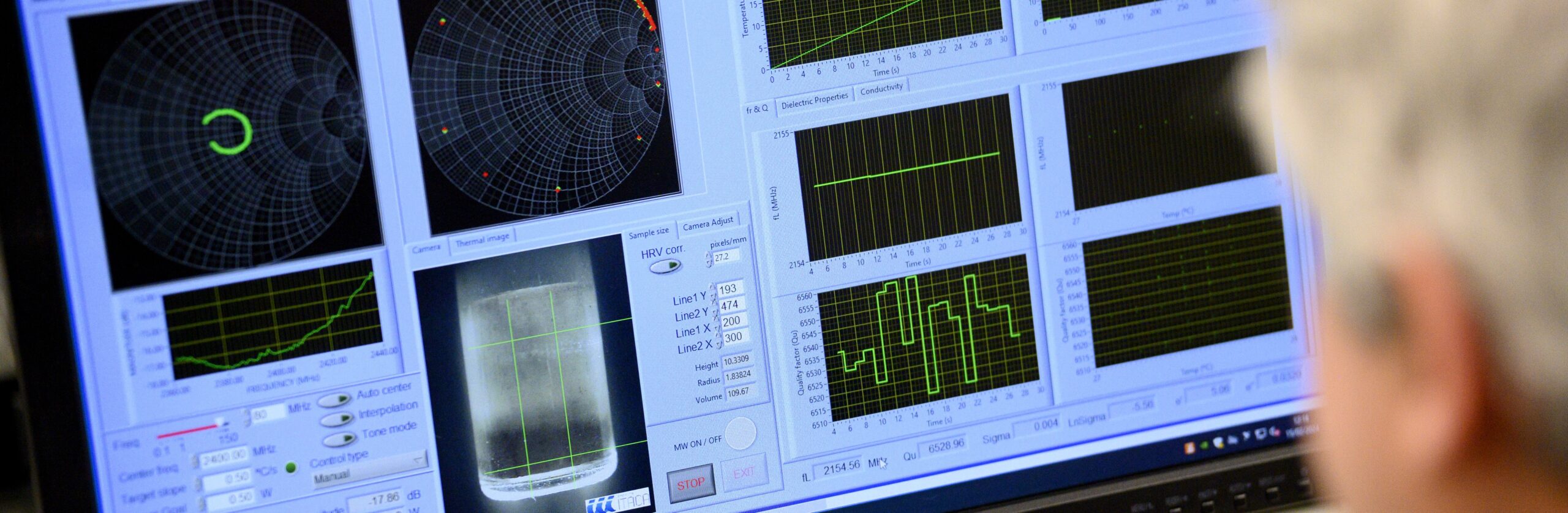
This paper presents a new system developed at the ITACA-DIMAS laboratory. It consists of a new microwave cavity and heating system for microwave processing and in situ dynamic measurements of the complex permittivity of dielectric materials at high temperatures (around 1000 ºC).
…
Dielectric properties measurements under microwave heating (IEEE MTT, 2015)Read More »
Microwave Technology for Sintering High-Quality Materials (ACT, 2014)
Discover the potential of microwave technology in material sintering with our study, ” Microwave, Spark Plasma and Conventional Sintering to Obtain Controlled Thermal Expansion β-Eucryptite Materials,” published in July 2014 in the International Journal of Applied Ceramic Technology.
In this work, lithium aluminosilicate was fabricated by three different methods: conventional, spark plasma and microwave sintering, from 1200 to 1300°C.
Microwave technology developed by DIMAS made possible to obtain fully dense glass-free lithium aluminosilicate bulk material (>99%) with near-zero and controlled coefficient of thermal expansion and excellent mechanical properties (7.1 GPa of hardness and 110 GPa of Young’s modulus).
…
Microwave Technology for Sintering High-Quality Materials (ACT, 2014)Read More »
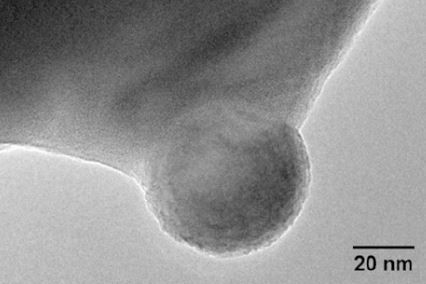
We demonstrate the exsolution of catalytically active Ni nanoparticles driven by microwaves in the absence of hydrogen or low pressures.
With the aid of microwaves, we were able to generate these exsolved nanoparticles at milder temperatures and shorter exposure times than conventional thermal exsolution.